
INTERVIEW: "Frogtown" Must Be Seen to Be Believed
Writer-director Costa Karalis invites audiences to experience this North Florida “magic trick”
If there’s one mission on filmmaker Costa Karalis’ mind, it’s to make movies unlike anything audiences have seen before.
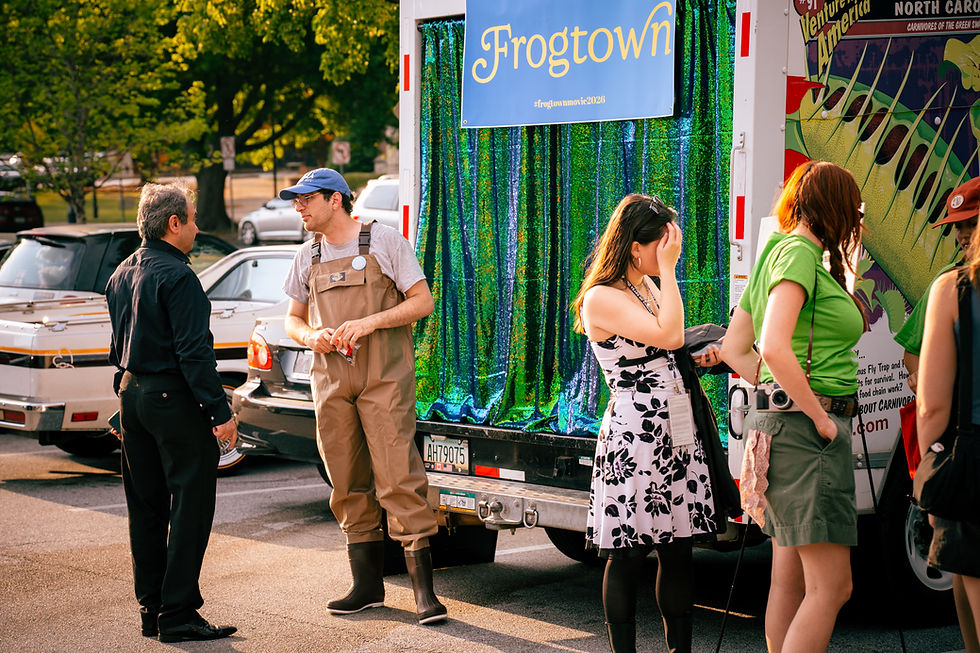
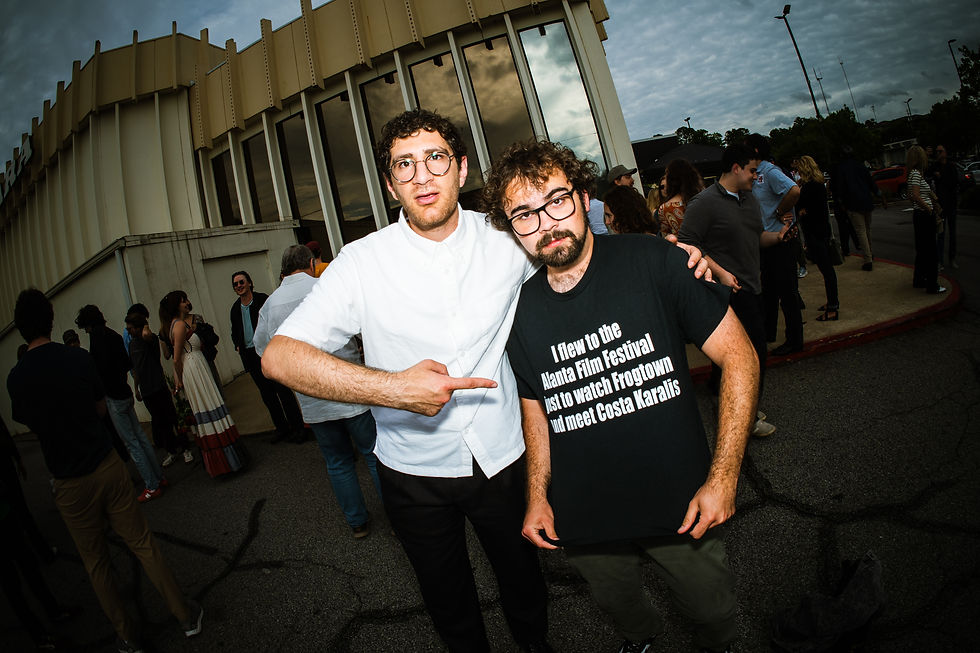
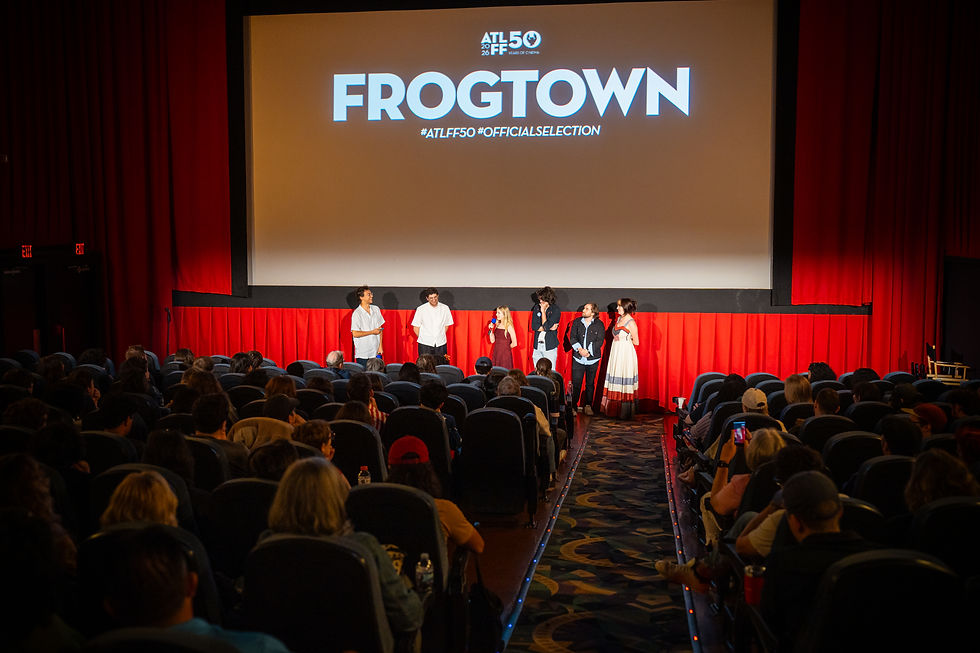
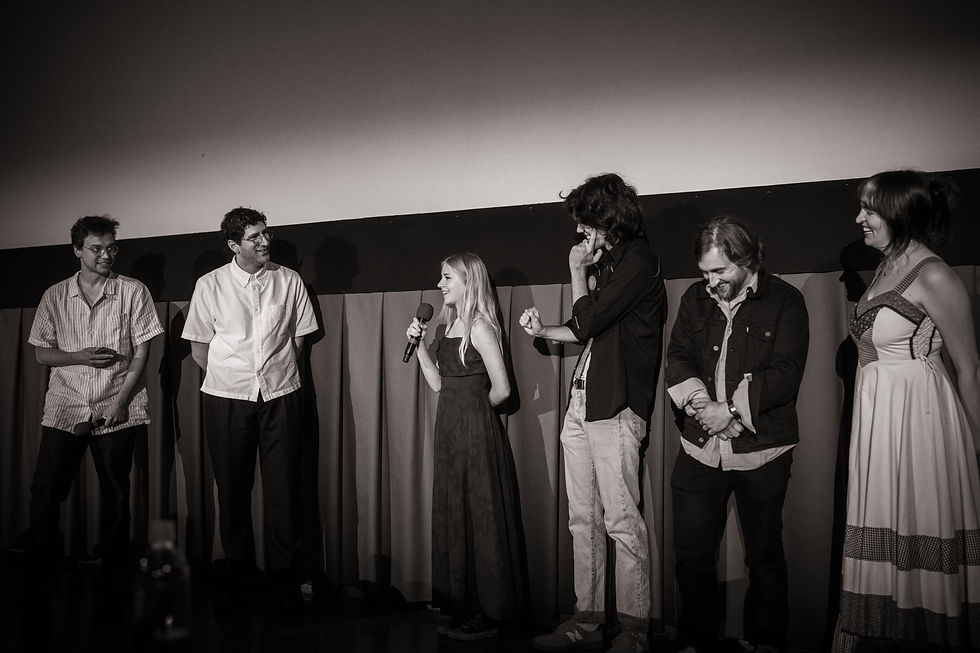
Karalis’ debut feature, Frogtown, had its Atlanta premiere on Saturday at the 50th Atlanta Film Festival. The film played to a sold-out audience, with a line of stand-by fans wrapped around the building. Chances are, it’ll sell out its encore screening on May 3rd, too. After watching the film, I talked to Karalis about directing the project, tapping into his Florida roots, and the wonder at the heart of this tale.

First and foremost, Frogtown is a film that must be seen to be believed. The project defies categorization, blurring the lines between everything you’ve ever known about cinema. Karalis requested that audiences go into the film completely blind and approach the story with a “childlike” mind: “Give yourself up to this experience of, ‘I don’t know what I’m about to see, and I’m excited by that.’” In this writer’s humble opinion, this article should be the extent of your research prior to watching.
Set in the North Florida swamps, the film is a love letter to the Sunshine State, its salt-of-the-earth residents, and the curiosity we lose as we leave childhood. Karalis has lived in Atlanta for five years, but he was raised near Clearwater and graduated from Florida State University. “I grew up there and really enjoyed playing outside and enjoying the Florida wilderness,” he shared. “A lot of my movies come from the absurdity of people trying to sort of live in this state. It's so hot, and it's so strange, and it's like this weird little microcosm.” The director also explained that his years at school in Tallahassee led him to “rediscover” what the state could be, venturing beyond his Central Florida stomping grounds.
Growing up in Jacksonville, I was all too familiar with the world of Frogtown. Ahead of the screening, a buddy of mine asked what I considered the “definitive” Florida movie. We threw around a handful of titles, from Sean Baker’s Orlando-centric The Florida Project to Duval’s own The Devil’s Advocate. The longer I pondered it, the number of iconic stories set in the state continued to grow: Moonlight, The Birdcage, Scarface, Ace Ventura: Pet Detective, I could go on. Florida films run the gamut across every genre and section of the state, but projects specifically about the northern towns are few and far between. “When you think of a Florida movie, so many people do default to the beach,” Karalis pointed out. “They default to Miami or this tropical sort of Florida, and it's so strange that as you get further north, you actually feel like you're in the south, right?”
“Whenever I hear somebody from North Florida say that they felt like it was home, it's always so, so thrilling to hear that because that's what we were hoping to do.”
Frogtown was filmed in the tiny town of Marianna, a Panhandle goldmine with a population around 3,000 people. When mapping out locations for the project, producer Evan Barber recommended his hometown as the perfect spot. “[Barber] knew everybody, everybody knew him, and it’s a tight-knit community,” Karalis said. “There was no other pick for where it was going to be other than Marianna.” Members of the crew stayed in Barber’s parents’ home, and the folks of Marianna instantly fell in love with the Frogtown team. “When you go to a small town like this and no one’s ever, ever filmed anywhere, people are just like, “Yeah, that sounds cool, I like that,” Karalis grinned. “I think Marianna was the secret that allowed us to be so flexible and do so much.”
In every aspect of its production, the film is rooted in exploring the wonder and whimsy attached to growing up. Karalis sought to capture the shifting nature of belief, adventure, and hope as you age. “When I was a little kid and I walked into a room, I wanted to see every corner of it. Like, ‘Oh, what’s behind that door, I wanna know,’” the director said. “We’re all curious as children, and then you sort of just realize, ‘Oh, it’s probably just a broom closet.’ And then, you don’t ask and you don’t look around and you don’t find out.” Frogtown invites audiences to tap back into this inquisitive energy—even the technical aspects of the film reflect this youthful hunger for knowledge. “The camera is meant to be like a child: curious,” Karalis added. “It moves on its own, it’s looking at things while [cinematographer] Chris [Violette] is operating it, and it’s peeking behind corners that you don’t normally get to do in a movie.”
At the end of our conversation, Karalis and I discussed the current state of film. We briefly tapped on the cloud of mergers and budget cuts looming overhead, but more importantly, we resolved that indie projects are the true future of the industry. “There was always going to be a core audience of people who comes out and watches strange movies and supports [them],” Karalis emphasized. “We have to look at it like it is an art form because it is. Just like any painting in a museum, there’s intention that goes behind this work. There’s talent that goes behind this work, and there’s artistic value in the work.” As an independently-financed feature, the Frogtown team was able to make the film they wanted without restraint or restriction—an experience that has set the tone for Karalis’ storytelling vision going forward. “I don’t want to make it if solely the goal of the company making it is just to make money off it,” he shared. “It’s so limiting and it changes so much about the process. If a movie is abstruse or challenging to watch, that’s alright. That might not mean that everybody is going to like it, and that’s okay too. That’s what we need to free ourselves from.”
“What we need to do is find people who are willing to support the vision and the art. There will always be an audience for it. [...] We just have to keep taking risks and pushing it forward as a medium and remembering that it is an art form and not just a commodity to be bought and sold.”
Just like Florida, Frogtown contains an allure that stands apart from everything (and everywhere) else. Karalis invites those who have seen the film to keep spreading its whimsy (without spoiling its secrets, of course) and encourages those who have yet to see the project to come experience its enchantment. “Someone called it a magic trick on the way out of the theater [on Saturday], which is the highest praise I’ve ever gotten,” Karalis smiled. “I just feel so proud of hearing that, but how do you get people to come see a magic trick? You can’t tell them about the trick, almost. The best way is to surprise them.”
Frogtown will rescreen at the Tara Theatre on May 3rd. Purchase encore tickets here. Follow @costakaralis for updates.


